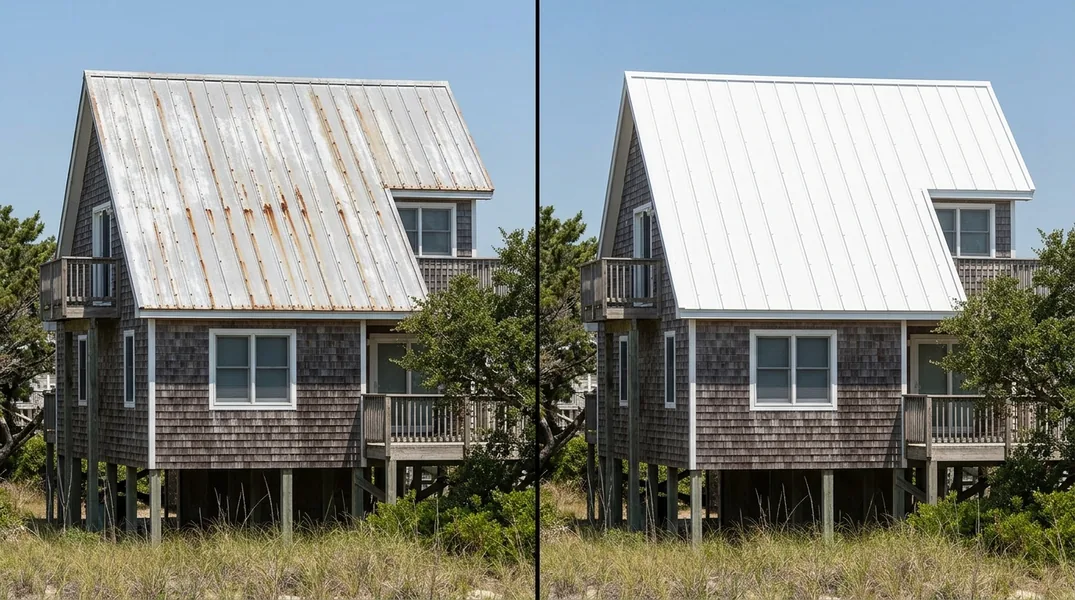
Why Salt Air Is So Hard on Roofs in Virginia Beach
Living near the ocean comes with a trade-off that most homeowners do not think about until their roof starts to fail. The same salt-laden air that makes a morning walk on the beach so pleasant is constantly settling on every surface of your home, and it is especially aggressive on metal. Salt accelerates oxidation, which means the corrosion process that would take decades inland can move much faster on a coastal roof. Add in the humidity, the frequent fog, and the wind-driven rain that pushes moisture into every seam and fastener, and you have one of the most demanding environments a roof will ever face.
For homeowners in Virginia Beach, this is not a theoretical concern. Roofs that would last 50 years in a drier climate can show rust, chalking, and fastener failure much sooner if the wrong metal is used. The good news is that metal roofing is still one of the best choices for coastal homes, provided you select a material and coating system engineered for salt exposure. The key is understanding that not all metal roofs are created equal when the ocean is a few miles away.
Galvalume vs Aluminum: How the Two Leading Coastal Metals Compare
When homeowners start researching metal roof corrosion, two names come up again and again: Galvalume and aluminum. Galvalume is steel coated with a mix of zinc and aluminum, and it is an excellent performer in most of the country. It is strong, affordable, and resists rust well in typical residential settings. However, the zinc in the coating is the sacrificial element that protects the steel, and in a salt-heavy environment that zinc gets consumed faster. Over time, coastal exposure can shorten the life of a Galvalume panel, especially near breaking surf or in areas with persistent onshore winds.
Aluminum, by contrast, forms its own protective oxide layer naturally and does not rely on a sacrificial coating the way steel does. That makes an aluminum metal roof coastal homeowners can trust, because the material itself resists salt corrosion rather than depending on a coating that wears away. Aluminum is also lighter, which can reduce stress on older framing, and it will not rust even if the surface is scratched. The trade-off is that aluminum typically costs more upfront than Galvalume, and it is not the right choice for every budget or every roof design. A reputable installer will walk you through both options honestly rather than pushing whichever material happens to be in stock.
Coatings, Fasteners, and Details That Decide Whether a Metal Roof Survives the Coast
The base metal is only part of the story. On a coastal roof, the coating system and the fasteners are just as important as the panel material. A high-quality Kynar 500 or Hylar 5000 finish adds a layer of protection against salt, sun, and moisture, and it holds its color far longer than cheaper paint systems. Equally important are the fasteners: standard steel screws will rust at the head and along the threads, and once a fastener fails, water finds its way in. Stainless steel or specially coated coastal fasteners are not optional on a beachside home, they are essential. The same logic applies to flashing, trim, and any cut edges, which are the first places corrosion tends to appear.
Installation quality matters just as much as the materials. A Standing Seam Metal Roofing system, for example, uses concealed fasteners and raised seams that shed water and salt far better than exposed-fastener panels. Proper detailing around valleys, chimneys, and penetrations keeps salt and moisture from pooling in places they should not. Homeowners in Norfolk and Chesapeake face the same coastal conditions, and the same rules apply: the details are what separate a roof that lasts from one that disappoints.
Choosing the Right Metal Roof for Your Coastal Home: A Practical Guide
So how do you decide? Start by being honest about your exposure. A home a few blocks from the ocean or on a canal with steady salt spray is a very different situation from a property several miles inland. If you are close to the water, aluminum is usually the safer long-term investment, even with the higher upfront price, because it eliminates the rust risk that comes with steel-based products. If you are further inland and working within a tighter budget, a high-quality Galvalume panel with a premium coating and stainless fasteners can still perform well, provided it is installed correctly and maintained.
It also helps to think about the full life cycle rather than just the day-one price. A roof that needs replacement in 20 years costs more in the long run than one that lasts 40 or 50, even if the second roof costs more to install. If your current roof is aging but the decking is sound, a Metal Roof Over Shingles (Retrofit) can be a practical way to upgrade to a coastal-grade metal system without a full tear-off. Whatever path you choose, ask your installer to specify the alloy, the coating, and the fastener type in writing, and do not accept vague answers. For a closer look at what a coastal-ready system would involve for your home, you can request a free estimate and get the details in plain language.
Metal Roof Installation Near Me: Finding a Contractor Who Understands Salt Air
Coastal roofing is a specialty, and not every contractor who installs metal roofs inland understands what changes near the ocean. A crew that works mostly in Richmond or Northern Virginia may never have dealt with salt-driven corrosion, and they may default to materials and fasteners that are fine elsewhere but a poor fit for a beachside home. When you are searching for metal roof installation near me, look for a company that asks about your proximity to the water, talks openly about Galvalume vs aluminum roof options, and can explain why one makes more sense for your address. That conversation is a good sign you are dealing with someone who has actually done this work on the coast.
Ask about warranties as well, and read the fine print on corrosion coverage. Some manufacturers exclude or shorten coverage for homes within a certain distance of the ocean, so a warranty that sounds impressive on paper may not apply to your property. A local contractor should know those exclusions and steer you toward products that are actually covered in a coastal zone. If you are comparing pricing between bids, make sure you are comparing the same alloy, coating, and fastener package, because a low bid that swaps in inland-grade materials is not really a savings. When you are ready to talk through your options, call Virginia Beach Metal Roofing at (757) 821-6340 or reach out online to schedule a free estimate.
Maintenance and Long-Term Care for Coastal Metal Roofs
Even the best coastal metal roof benefits from a little attention. Salt deposits and debris should be rinsed off periodically, especially after storm season, and gutters should be kept clear so water does not back up under the panels. It is also worth having the roof inspected every couple of years to check fasteners, sealant, and any cut edges where corrosion can start. These are simple steps, but they go a long way toward protecting your investment and catching small issues before they become expensive ones.
If your current roof is already showing rust, staining, or failing fasteners, do not wait for a leak to force the issue. A Metal Roof Replacement with a coastal-grade system can stop the cycle of repairs and give you decades of peace of mind. Homeowners in Portsmouth and throughout the region face the same salt air, and the right roof makes all the difference. Whether you need a full Metal Roof Installation or just an honest assessment of what you have, a local expert can help you sort it out.
Looking for a professional metal roofing contractor in Virginia Beach? Virginia Beach Metal Roofing responds fast for all your metal roofing needs.
Get a Free QuoteOur services: Metal Roof Installation · Standing Seam Metal Roofing · Metal Roof Replacement